All-on-4 Implants Abroad: Costs and Follow-Up
Compare All-on-4 implant planning abroad: itemized costs, implant components, travel for treatment stages and arrangements for follow-up at home.
You’ve been quoted somewhere between $20,000 and $35,000 for All-on-4 dental implants at home. That number stops most people cold. Then the research starts: Hungary, Mexico, Thailand, Turkey, China. Every forum has a different answer, every clinic website looks identical, and the price gap is wide enough to fund a month abroad with money left over.
This article breaks down the four most-searched destinations for All-on-4 dental implants abroad in 2026 — comparing cost, clinical infrastructure, logistics, and realistic risk — and explains how to compare total treatment and follow-up costs.
What All-on-4 Actually Involves (and Why Destination Matters)
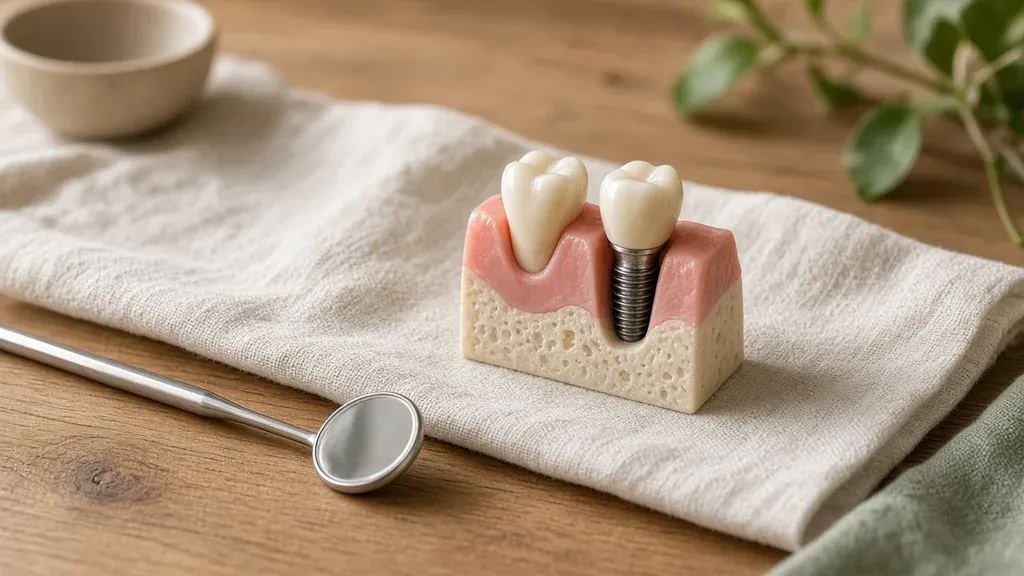
All-on-4 is a full-arch restoration: four titanium implants placed into the jawbone, supporting a fixed prosthetic arch. The procedure requires CBCT imaging, precise surgical planning, implant placement, and a temporary arch fitted the same day. A permanent final arch follows after osseointegration — typically three to six months later.
That timeline shapes your destination decision. You either need two trips or one extended stay. And because osseointegration is a biological process, complications can surface after you’ve returned home. Post-treatment follow-up isn’t optional — it’s part of the outcome.
Three things determine the quality of your result: the surgeon’s caseload, the implant system used, and the prosthetics lab. All three vary significantly by country and by individual clinic. Choosing to go abroad isn’t a single decision — it’s a series of decisions about where, with whom, and under what oversight.
The Four Destinations Most International Patients Compare in 2026
Hungary
Hungary has been the default European dental tourism destination for UK and Western European patients for two decades. Budapest in particular has built a dense cluster of clinics around British, Irish, and Scandinavian patients.
Typical All-on-4 pricing in Hungary runs from approximately $8,000 to $14,000 per arch, depending on implant brand and prosthetic material. That’s a meaningful saving against UK or Irish prices, and the geographic proximity makes a two-trip protocol manageable.
The risk is clinic quality variance. Assess each clinic individually, including its registration and treating clinicians. Some Budapest clinics are genuinely excellent; others have built volume on price alone. Vetting requires checking individual accreditations, surgeon credentials, and implant system documentation — none of which is standardised or easy to verify from abroad.
Post-treatment follow-up is typically limited to whatever the clinic offers directly. Once you’re home, you’re largely on your own unless you’ve arranged ongoing care with a local dentist willing to manage another clinic’s work.
Mexico
Mexico is the dominant destination for US and Canadian patients, primarily because of proximity. Los Algodones, Tijuana, and Cancun each have established dental tourism ecosystems.
All-on-4 pricing in Mexico typically ranges from $6,000 to $12,000 per arch. For patients in the American Southwest, the logistics are straightforward: a short drive or flight, no visa requirement, and same-day return possible for consultations.
The quality spread in Mexico is wider than in Hungary. High-volume border towns in particular mix excellent clinics with operations that have optimised for throughput over outcomes. Implant brand documentation is inconsistent — some clinics use Nobel Biocare or Straumann systems; others use unbranded implants that lack the same long-term clinical data.
US-trained dentists are not uncommon in major border cities, and language is less of a barrier than in some other destinations. Structured post-treatment remote follow-up, however, is rarely part of the offering.
Thailand
Thailand has a strong reputation for elective procedures broadly, and Bangkok’s private hospital dental departments are genuinely well-equipped. All-on-4 pricing at reputable facilities sits roughly in the $9,000 to $16,000 per arch range.
The main friction for Western patients is distance. A return trip from the UK, US, or Canada adds significant cost and time. For a two-stage All-on-4 protocol, two long-haul flights are a real logistical and financial variable. Thailand works better for patients already in the region or those planning an extended stay.
Clinical infrastructure at Bangkok’s private hospitals is strong. The challenge is that “Thailand dental tourism” covers everything from hospital-grade dental departments to standalone clinics with no accreditation. There is no single nationally administered quality tier that functions as a reliable filter.
China
China is the most underestimated destination in this comparison for Western patients — and increasingly the most discussed in 2026 as the reverse medical tourism trend accelerates.
Hospital and clinic arrangements differ across these destinations. Hospital suitability depends on the specific department, clinician credentials and care required. When dental work is performed inside a Chinese hospital’s stomatology department, the facility, sterilisation standards, imaging equipment, and specialist credentials are all subject to national oversight.
That distinction matters specifically for All-on-4. CBCT imaging, surgical planning, and prosthetics lab quality are all infrastructure-dependent. Ask the dental department how it plans and checks each stage of your restoration.
Costs are often substantially lower than in the US or UK; quotes vary by case. Sino RX publishes a starting price of $800 for single dental implants; full-arch All-on-4 pricing varies by case complexity and implant system, and an itemised written quote is provided before any commitment.
The historical barrier for Western patients has been self-navigation: language, visa logistics, and identifying a verified facility rather than a discount clinic. That barrier has narrowed considerably in 2026. China’s 240-hour transit visa exemption is active, and medical concierge services now handle the full logistics chain for international patients.
Planning Costs and Follow-Up Across Destinations
| Factor | Hungary | Mexico | Thailand | China (hospital estimates) |
|---|---|---|---|---|
| Hospital and clinician credentials | Verify individually | Verify individually | Verify individually | Verify individually |
| Implant brand transparency | Variable | Variable | Variable | Confirm with hospital |
| Post-treatment remote follow-up | Clinic-dependent | Clinic-dependent | Clinic-dependent | Structured (via Sino RX) |
| English-language documentation | Common | Common | Common | Provided at discharge |
| Visa requirement (UK/US/CA/AU) | Schengen | None for US/CA | Visa-on-arrival | 240-hour exemption available |
| Logistics support | Self-managed | Self-managed | Self-managed | Full stack available |
Figures represent typical ranges for 2026. China pricing via Chinese hospitals coordinated through Sino RX.
The Variable Nobody Prices In: What Happens If Something Goes Wrong
This is where destination comparisons usually stop being honest. Revision surgery after a failed implant or a poorly fitting arch is expensive, painful, and exhausting. The question isn’t just “what does the procedure cost?” It’s “what does it cost if I need it redone?”
In Hungary, Mexico, and Thailand, post-treatment support is largely whatever you negotiate individually with the clinic. There is no standardised follow-up protocol for international patients. If a complication develops six months after you’ve returned home, you’re managing that relationship across time zones and language barriers on your own.
Structured post-treatment remote follow-up, coordinated with the treating surgeon, is a meaningful differentiator. It doesn’t eliminate complications — but it means they’re caught earlier and managed through an established channel rather than through cold emails to a foreign clinic.
For patients considering China, Sino RX coordinates post-treatment remote follow-up as part of the service. English-language medical records are provided at discharge so your home-country dentist has the documentation needed to manage ongoing care.
How to Vet Any Destination Before You Book
Whether you choose China, Hungary, Mexico, or Thailand, the vetting logic is the same. The article on finding a trustworthy clinic without cutting corners covers this in detail, but the core questions are:
- What implant system is used, and can you verify the brand and model in writing?
- What is the surgeon’s documented caseload for All-on-4 specifically?
- What does the post-treatment follow-up protocol look like for international patients?
- Is the facility accredited, and by what body?
- Is the quote itemised, or is it a package price that obscures what’s included?
A clinic that can’t answer all five questions clearly is not a clinic you should trust with a full-arch restoration.
Why China Is Gaining Ground in 2026
The reverse medical tourism trend documented in international healthcare journals in 2026 reflects something real: patients from high-cost markets are increasingly choosing China not as a last resort but as a considered first option.
Evaluate the proposed department, clinician credentials and follow-up arrangements individually. A hospital stomatology department in Beijing or Shanghai operates under national oversight, with equipment and staffing standards that are verifiable — not self-reported.
The secondary reason is the logistics infrastructure that now exists for international patients. Visa complexity, language barriers, and travel coordination were genuine friction points five years ago. In 2026, Sino RX handles the full chain: visa invitation letter guidance, flights, accommodation near the hospital, bilingual on-the-ground coordination during your visit, as arranged in advance, and post-treatment follow-up.
For more on what the process looks like from a patient’s perspective, the dental implants China cost and process guide covers the patient journey in detail. If you’re comparing specific cities, the dental tourism in China guide for international patients breaks down which cities and hospitals patients ask about for this type of work.
The Sino RX Model: How It Differs From Booking Direct
Sino RX is a medical concierge service, not a hospital or clinic. It coordinates access to Chinese hospitals across China and sets out hospital costs and coordination fees separately. Patients receive an itemised written quote and pay the hospital’s listed prices directly. Consultation is free. Our coordination fee is quoted in writing before you commit.
The process starts with a free case screening. The consultation is free. Our coordination fee is quoted in writing before you commit. You receive a response usually within 1–2 business days, get matched to a specialist suited to your specific case, and receive the itemised quote before any further commitment.
That structure matters for All-on-4 specifically because case complexity varies significantly. Bone density, arch condition, and the number of extractions required all affect the final scope and cost. An itemised quote from the treating specialist is the only honest basis for comparison.
For a like-for-like comparison, the dental implant cost guide explains how to compare written quotes, treatment stages, travel and aftercare.
Which Country Actually Wins on Outcome Per Dollar?
There is no single answer that applies to every patient. Proximity matters. Risk tolerance matters. The complexity of your specific case matters.
Ask the chosen hospital to confirm its department, clinician credentials, complication plan and follow-up for your case. Sino RX provides non-clinical coordination; the hospital determines suitability and care.
Ask the chosen hospital to confirm its department, clinician credentials, complication plan and follow-up for your case. Sino RX provides non-clinical coordination; the hospital determines suitability and care.
To find out whether your specific case is a good fit for treatment in China, submit it through Sino RX at chinamedicaltour.com. No commitment required. You’ll receive a response usually within 1–2 business days, a specialist match, and an itemised quote — just an honest assessment of your options before you decide anything.
Frequently Asked Questions
What does All-on-4 dental implants abroad typically cost in 2026?
Prices vary significantly by destination. Hungary typically runs $8,000 to $14,000 per arch; Mexico $6,000 to $12,000; Thailand $9,000 to $16,000. In China, costs are often substantially lower than in the US or UK; quotes vary by case.
Is All-on-4 in China safe?
Safety depends on the facility and the surgeon, not the country. For All-on-4, assess the surgeon’s full-arch experience, prosthetic plan and arrangements for complications. All-on-4 performed in a hospital stomatology department is subject to the same facility and staffing oversight as major academic medical centres.
How many trips do I need for All-on-4 abroad?
Most All-on-4 protocols require two stages: implant placement with a temporary arch, then final arch placement after osseointegration — typically three to six months later. That means two trips, or one extended stay. Your case coordinator can advise on the specific timeline for your case.
What happens if I have a complication after returning home?
This is the most important question to ask any clinic or coordinator before booking. Sino RX provides structured post-treatment remote follow-up coordinated with the treating surgeon. English-language medical records are provided at discharge so your home-country dentist has full documentation.
How are Sino RX coordination and hospital charges paid?
Consultation is free. Our separate coordination fee starts at $190 depending on scope and is quoted in writing before you commit. Patients pay hospital fees directly to the hospital.
Do I need a visa to travel to China for dental treatment?
China's 240-hour transit visa exemption is active in 2026 and covers many nationalities for short stays. Sino RX includes visa invitation letter guidance as part of its logistics service. Your specific requirements depend on your nationality and itinerary — Sino RX will advise on this during the coordination process.
How do I compare implant quality across different countries?
Ask for the implant brand and model in writing, then verify it independently. Major systems like Nobel Biocare, Straumann, and Osstem have published long-term clinical data. Unbranded or undisclosed implant systems are a red flag regardless of destination. Hospitals in China use documented implant systems that meet national procurement standards.
Request a free consultation
Tell us your treatment goal and preferred language. A coordinator usually replies within 1–2 business days. Consultation is free; we only charge a coordination fee if you book our coordination service.
Coordination from $190, confirmed in a written quote
Request a free consultation